
What Homeowners in Pell City, AL Need to Know Before a Septic System Installation
Planning a Septic System Installation in Pell City, AL, requires more preparation than most homeowners expect. Understanding the process from soil evaluation to final inspection can help you avoid delays, unexpected costs, and code violations before a single shovel hits the ground.
What the Septic System Installation Process Looks Like
Installation follows a clear sequence. It begins with a perc test, which measures how quickly water drains through your soil and determines whether a conventional drain field will work or whether an alternative system is needed. A licensed engineer then uses that data to design a system sized for your household's wastewater output, typically calculated by the number of bedrooms.
Next, a permit application must be submitted to and approved by the St. Clair County Health Department before any work begins. The permit covers system design, tank sizing, and drain field layout. After installation, a mandatory inspection is conducted before the system is covered and an approval for use is issued.
Alabama-Specific Factors That Affect Your Installation
In Alabama, all installation work must be performed by a contractor licensed by the Alabama Onsite Wastewater Board (AOWB). Hiring an unlicensed installer can void your permit and create costly legal and repair problems.
St. Clair County soil varies across properties. Many areas near Pell City, AL, contain clay-heavy soil that drains slowly and may not support a conventional system, requiring a larger drain field or alternative design to meet percolation standards. A perc test is not optional; it is required as part of the permit application.
Alabama regulations also set specific setback distances. The effluent disposal field must be at least 100 feet from a private well or potable spring and 5 feet from a property line. Properties near Lay Lake or other local waterways may face additional site-specific requirements.
What Factors Affect Installation Cost?
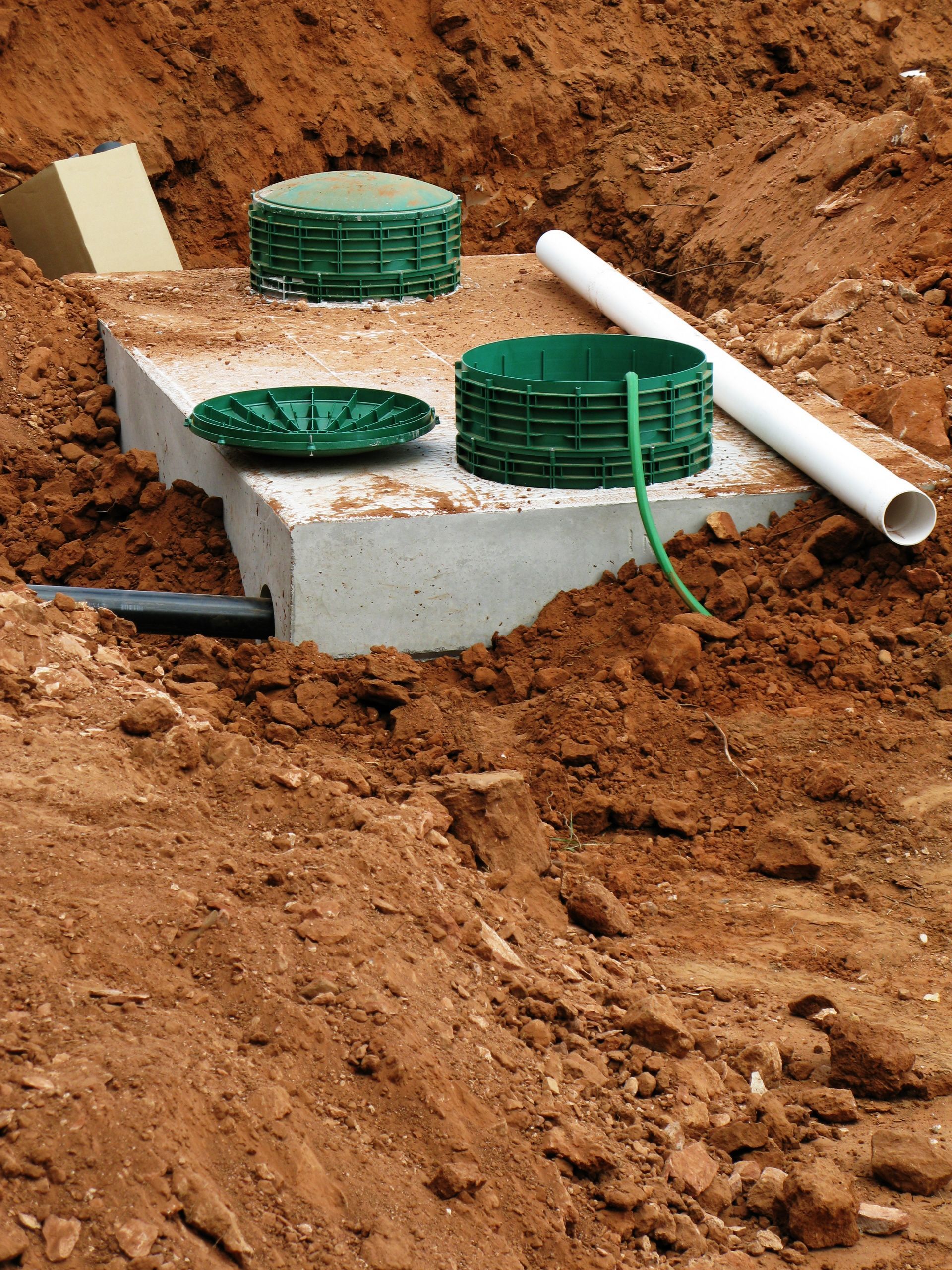
Several variables affect total cost. Steep slopes or rocky ground increase labor and equipment needs. Slower-draining soil requires more drain field square footage. Tank material is a factor: concrete tanks are durable but heavy, while fiberglass tanks are easier to install in tight spaces. System type matters most. A conventional system on suitable soil costs less than an engineered alternative required for poor percolation or limited space.
Conventional vs. Alternative Septic Systems
A conventional system uses a gravity-fed drain field and works well when soil percolation falls within standard ranges. An alternative system, such as a mound or pressurized-dosing design, is required when native soil cannot support standard installation. Alternative systems involve more components and higher costs but can make a previously unbuildable lot viable.
Why Hiring a Locally Experienced Contractor Matters
A contractor familiar with local soil conditions, the St. Clair County Health Department permit process, and AOWB requirements can move through approvals faster and avoid design errors that cause rejections. This reduces costly revisions and keeps your project on schedule. In Alabama, only AOWB-licensed professionals may legally install or repair a septic system, so verifying licensure before hiring is essential.
Ready to Plan Your Septic Installation in Pell City?
Jacksonville, AL-based Economy Septic Tank Service proudly serves Pell City, AL, and surrounding St. Clair County communities with professional
septic tank installation and residential septic system service. With nearly 50 years of experience and a licensed, bonded, and insured team, it brings the local knowledge needed to navigate permits, soil conditions, and system design in this area. Call
(256) 435-1086 to
request a free estimate or visit
Economy Septic Tank Service online to learn more.