
Septic System Installation in St. Clair County, AL: Permits, Soil Types, and What to Expect in 2026
Homeowners and developers planning Septic System Installation in Pell City, AL, face a process that involves county permits, soil evaluation, and careful system selection. This guide breaks down what to expect in 2026 so you can plan your project with confidence.
St. Clair County Permit Requirements You Need to Know First
Getting a permit is the first required step before any work begins on your property. Alabama state law requires a permit before any Septic System Installation can start, and that permit comes from the St. Clair County Health Department.
How to Apply for a Septic Permit in St. Clair County
The St. Clair County Health Department handles permit applications for properties generating less than 10,000 gallons of sewage per day. This covers nearly all residential homes and most small commercial buildings. You will submit an application to the Environmental Health Division, and a county sanitarian will be assigned to your property.
The sanitarian reviews your site conditions, including lot size, setbacks from nearby water features, and drainage patterns. Pell City properties near Logan Martin Lake may face additional review due to their proximity to surface water, so plan your timeline with that in mind.
Alabama also requires that all installation work be completed by a contractor licensed through the Alabama Onsite Wastewater Board. Homeowners cannot legally perform their own installation under state rules.
What Recent County Discussions Mean for 2026 Applicants
St. Clair County commissioners debated new subdivision regulations in 2026, including a proposed minimum lot size of around 15,000 square feet for properties relying on conventional systems. Discussions also addressed engineered and injection-type systems and long-term maintenance responsibilities. These proposed rules may still be evolving, so check with the county health department for the most current requirements before finalizing any lot purchase or build timeline.
How Pell City Soil Types Affect Your System Choice
Soil conditions directly determine what type of septic system your property can support. Pell City sits within St. Clair County at the southern tip of the Appalachian Mountain Range, and the area's soil profiles can vary considerably from one lot to the next.
The Dominant Soil Types Around Pell City
Soils mapped as Minvale-Dewey, described as loamy and clayey material formed from weathered chert and limestone, run from the Lake Logan Martin shoreline northwest toward the city center. Townley-Tasso-Wax soils, a mix of clayey and loamy material formed from shale and sandstone, are also common throughout the area.
Heavy clay content slows drainage significantly, which affects drain field sizing and may require an alternative system. Loamy soils that blend sand, silt, and clay tend to perform best because they balance absorption and drainage. Properties on ridgelines or near creek drainages may also encounter shallow bedrock or seasonally high water tables, which can further limit your options.
What Is a Perc Test and Why Is It Required?
A perc test measures how quickly water drains through your soil, expressed in minutes per inch. The Alabama Department of Public Health requires a successful perc test before a septic permit is issued. Most conventional systems need a result between roughly 5 and 60 minutes per inch to qualify.
Soil that drains too slowly may require an engineered alternative such as a mound system or aerobic treatment unit. A result outside the acceptable range does not automatically make a property undevelopable, but it does mean a more complex solution may be necessary.
Conventional vs. Alternative Systems: Which One Fits Your Property?
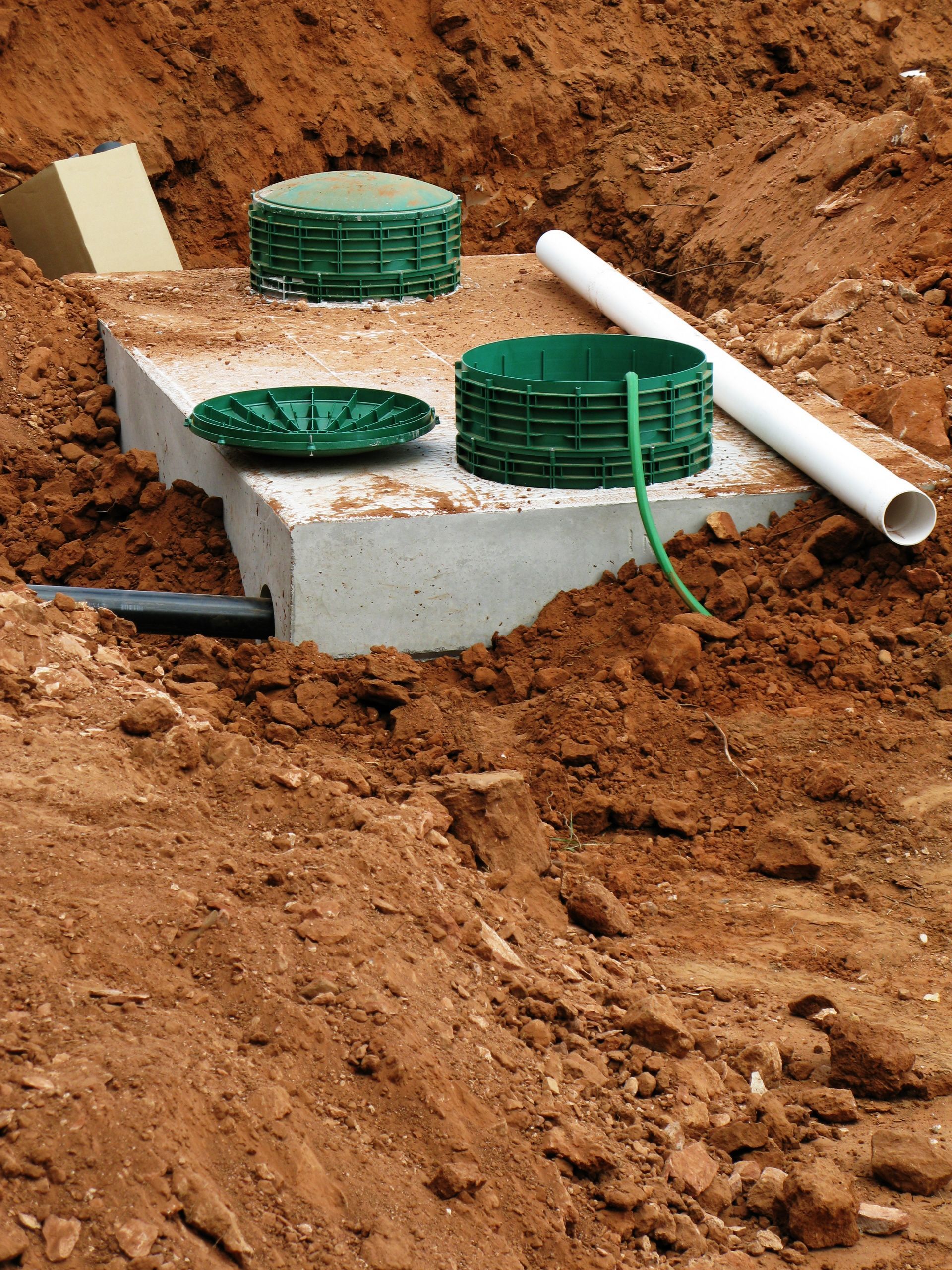
The right system type depends entirely on what the soil evaluation reveals. Conventional gravity-fed systems are the most affordable and common choice when soil conditions allow. They pair a septic tank with a gravel-filled drain field and need no electricity to operate.
When conventional systems are not suitable, alternative options may include:
- Mound systems, which raise the drain field above natural grade to create enough soil depth for proper treatment.
- Aerobic treatment units, which introduce oxygen to break down waste more thoroughly before it reaches the drain field.
- Low-pressure dosing systems, which distribute effluent more evenly across the drain field to protect slower-draining soils.
Your sanitarian and licensed contractor can help identify which system meets your site conditions and current St. Clair County standards.
Ready to Move Forward? Get a Free Estimate Today
Septic System Installation serving Pell City, AL, requires the right permits, a thorough soil evaluation, and a system matched to your land. Economy Septic Tank Service has been a licensed, bonded, and insured family-owned business since 1975, serving St. Clair County and surrounding communities across northern Alabama. Whether you are planning a new build, replacing an older system, or simply trying to understand your options, the team can help.
Call (256) 435-1086 to request a free estimate, or visit the septic tank installation page for service details. You can also submit a request through the free estimate form to get connected with the team quickly.